
Building a Pure Land on Earth: Humanistic Buddhism in Taiwan
By: Billy Pang
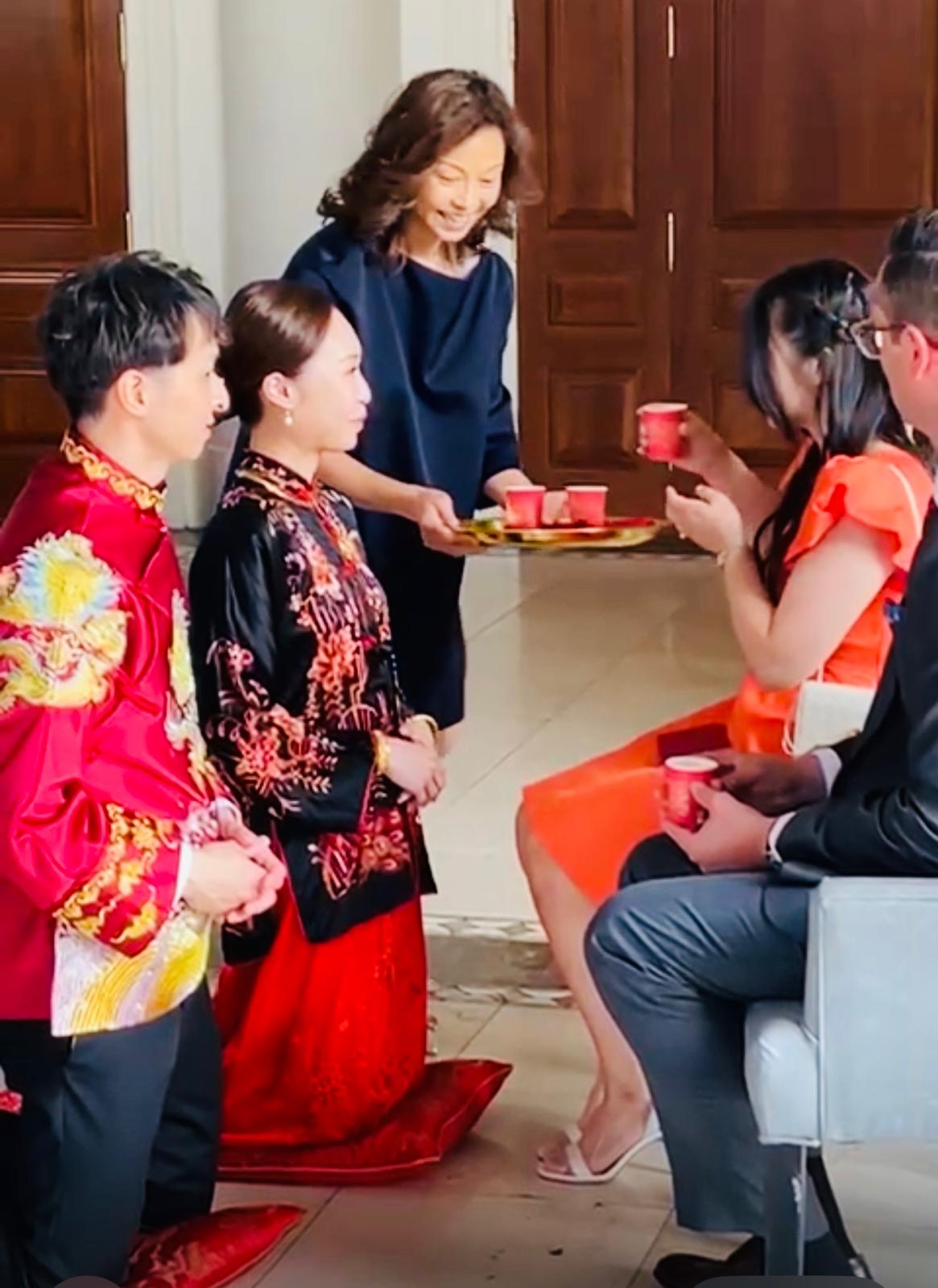
On New Year’s Day 2026, thirty-seven couples gathered at the Fo Guang Shan Buddha Memorial Center to be married in a Buddhist wedding ceremony. At the same ceremony, another 344 couples renewed their vows and received blessings as “Bodhi couples.” Family members and friends attended in person, while nearly 10,000 people participated online.
The ceremony was unmistakably Buddhist: monks presided over it, Buddhist teachings guided the couples, and the Buddha was at the centre of the ceremony. Yet the emphasis was not on escaping from ordinary life. Instead, the couples were encouraged to practise compassion, patience, understanding and wisdom within their marriages. The abbot, Venerable Hsin Bau, described the family as a place of practice — a “Dharma field” in which husband and wife learn to overcome disagreements through tolerance and compassion. The message was simple: Buddhism is not only something practised in a monastery. It can be practised at home, in marriage and in everyday relationships.
This ceremony provides a fascinating introduction to Humanistic Buddhism, one of the defining features of modern Taiwanese Buddhism. Its central question is not simply how human beings can leave this world behind, but how Buddhist values can help people live better lives—and create a better society—here and now.
From Buddhist Reform to Humanistic Buddhism
Humanistic Buddhism has its roots in the reform of Chinese Buddhism during the early twentieth century. One of its most important figures was the monk Taixu (1890–1947). Confronting a Buddhist tradition that, in his view, had become too heavily focused on ritual and ceremonies, including rituals associated with the dead, Taixu called for Buddhism to respond more directly to the needs of modern society. He advocated education, social engagement, and institutional reform.
Taixu’s reform agenda did not fully develop in mainland China, but his ideas profoundly influenced a younger generation. Among them was Yin Shun (1906–2005), who became an important interpreter of Humanistic Buddhism and later continued his work in Taiwan. Following the Communist victory in 1949, Yin Shun and other Buddhist teachers moved to Taiwan, where ideas of modern Buddhist reform found new opportunities to develop.
Taiwan consequently became an important refuge and laboratory for modern Chinese Buddhism. The Communist revolution and, later, the Cultural Revolution caused enormous disruption and destruction to religious institutions and Buddhist traditions on the mainland. Taiwan, meanwhile, preserved important elements of Chinese Buddhist culture while providing space in which new forms of Buddhist organization could emerge.
Humanistic Buddhism expanded particularly rapidly after Taiwan’s economic development and the lifting of martial law in 1987. Several factors made Taiwan fertile ground: increasing economic prosperity, greater political and social freedom, continuing Chinese cultural traditions, and the arrival of many monks and Buddhist teachers from mainland China after 1949. By the late twentieth century, Taiwanese Buddhism had developed into a highly organized and socially engaged religious movement.
Humanistic Buddhism is guided by six principles: humanism, altruism, daily-life practice, joyfulness, timeliness, and universality. It focuses on the well-being of people in this life, encouraging individuals to benefit others through compassion and ethical action. Buddhist practice extends beyond temples into family, work, education, and community life, while joyfulness emphasizes happiness and meaningful relationships. At the same time, Humanistic Buddhism responds to the needs of the modern world through education, culture, technology, and social engagement. Finally, its Mahayana ideal of universality calls for compassion and benefit for all beings. Together, these principles bring Buddhism into everyday life and make it relevant to the challenges of the present age.
These principles produce an important shift in emphasis. Rather than concentrating primarily on rituals for the dead or on attaining a distant Pure Land after death, Humanistic Buddhism asks how a kind of Pure Land can be created in this world. Education, culture, charity, ethical living, and social engagement become ways to transform the world.
In this sense, the traditional bodhisattva ideal is brought into ordinary life. A bodhisattva is not merely a supernatural figure. Ordinary people can practise the bodhisattva path by helping others, cultivating compassion and wisdom, and contributing to their families and communities.
The Buddhist wedding at Fo Guang Shan illustrates this beautifully. Marriage itself becomes a form of practice. Couples are encouraged to replace criticism with appreciation, conflict with tolerance, and self-interest with mutual care. The Buddhist path is brought into the home.
Taiwanese Buddhist organizations
Among Taiwan’s Buddhist organizations, Fo Guang Shan provides perhaps the most comprehensive institutional expression of Humanistic Buddhism. Founded in 1967 by Venerable Master Hsing Yun in Kaohsiung, Fo Guang Shan grew from a relatively small mountain monastery into Taiwan’s largest Buddhist monastery and an international Buddhist organization. Its official mission explicitly includes promoting Humanistic Buddhism and establishing a “Pure Land on earth.”
What makes Fo Guang Shan particularly interesting is the breadth of its activities. It is not simply a monastery. Its work includes education, publishing, cultural activities, museums, art, media, universities, community service and international Buddhist centres. The organization has also embraced modern technology and communication as tools for spreading Buddhist teachings. Its lay organization, the Buddha’s Light International Association (BLIA), extends this work beyond the monastic community. Through its network of lay members and volunteers, Buddhist practice becomes part of community and social life.
Other major Taiwanese Buddhist organizations demonstrate different dimensions of Humanistic Buddhism. Tzu Chi is particularly well known for humanitarian relief, medical care, disaster response, and environmental work. Dharma Drum Mountain, founded by Master Sheng Yen, emphasizes meditation, education, and the protection of the “spiritual environment.” Chung Tai Shan is particularly associated with Chan practice and the integration of traditional Buddhist practice with contemporary institutional life.
Together, these organizations have established schools, universities, hospitals, cultural institutions, media organizations, international temples, and enormous volunteer networks. They have consequently become important actors in Taiwanese civil society, extending Buddhist values far beyond the traditional temple.
Where Does Humanistic Buddhism Meet Humanism?
For a secular humanist audience, Humanistic Buddhism is particularly interesting because there are several areas of genuine resonance.
First is the centrality of human welfare. Humanistic Buddhism emphasizes suffering, happiness, ethical behaviour and relationships in this life. It asks people to take responsibility for improving their own lives and the lives of others.
Second is its strong commitment to education and cultural enrichment. Fo Guang Shan has invested heavily in schools, universities, publishing, museums and cultural programs. Knowledge and education are not treated as enemies of spirituality but as essential parts of human development.
Third is compassion expressed through action. Whether through humanitarian relief, healthcare, environmental programs, education or community service, Taiwanese Buddhist organizations demonstrate that ethical ideals can become practical social programs.
There is also a strong emphasis on peaceful social engagement, dialogue, and community participation. Humanistic Buddhism has shown that a religious tradition can engage with modern urban society without simply rejecting modernity.
There is an important difference between Humanistic Buddhism and secular humanism. Humanistic Buddhism remains a religious tradition. It has monastic communities, Buddhist rituals, spiritual disciplines and ultimate goals associated with enlightenment and liberation. It therefore should not be described as secular humanism or as Buddhism without religion.
A better description might be religious humanism: a religious tradition that places extraordinary emphasis on human life, human responsibility, ethical action and the transformation of society while retaining its Buddhist spiritual framework.
A Pure Land for the Present
The New Year’s Day wedding ceremony at Fo Guang Shan offers a remarkably accessible window into this philosophy. Thirty-seven couples began married life by making commitments before the Buddha, while hundreds of other couples returned to renew commitments made decades earlier. Their religious practice was not separated from their ordinary lives. Marriage, family, love, conflict, patience and responsibility all became part of the Buddhist path.
This is perhaps the most important lesson of Humanistic Buddhism. An ancient religious tradition does not necessarily have to retreat from modern life in order to preserve its identity. It can reinterpret its teachings in response to contemporary circumstances and create new institutions through which those teachings can be lived.
Taiwan provides a particularly striking example. Humanistic Buddhism transformed the traditional image of the temple from a place primarily concerned with ritual and religious devotion into a broader network of education, culture, charity, community service and social engagement.
For Canadian humanists, Humanistic Buddhism offers an intriguing case study in religious modernization. It also presents opportunities for respectful dialogue. Secular humanists and Humanistic Buddhists do not share the same understanding of religion, ultimate reality or liberation. Yet they can recognize common concerns: reducing suffering, cultivating compassion, promoting education, encouraging ethical responsibility and creating communities in which people can live with dignity and mutual respect.
Perhaps that is what it means to build a Pure Land on Earth—not to wait for a perfect world somewhere beyond this one, but to take responsibility for making this world a little more compassionate, humane and joyful.
That work, whether undertaking from a religious or secular humanist perspective, begins where human life takes place: here, now, and among other people.