
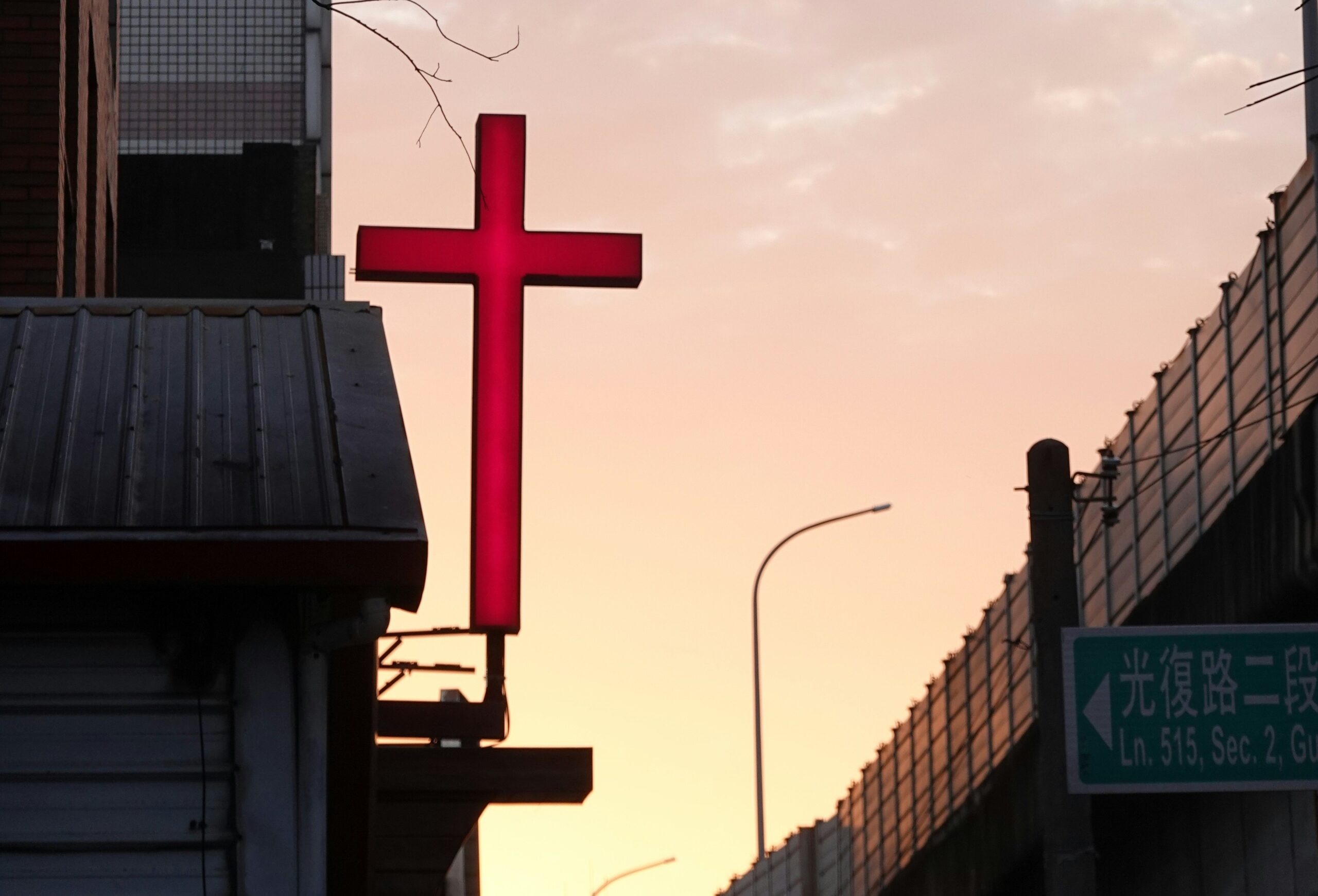
The Red Neon Crosses of Seoul
Guest Blog by Billy Pang
As night falls over Seoul, the city’s skyline is illuminated by a ubiquitous and striking feature: thousands of glowing red neon crosses, piercing the darkness from the rooftops of mega-churches. To a foreign observer, South Korea looks like a nation consumed by religious fervor — a rare success story of lightning-fast Christianization in East Asia during the 20th century. Yet, step inside these sanctuaries on a Sunday morning, and a different reality emerges. The pews are graying, the youth are missing, and the silence is deafening.
According to recent Gallup Korea surveys, a tectonic shift is underway: the country’s religious population has plummeted from over 54% in 2004 to roughly 40% in 2025. Most dramatically, over 75% of South Koreans in their twenties now identify as having “no religion”. In a society historically bound by rigid Confucian hierarchies and later anchored by powerful Christian networks, the younger generation is staging a silent, collective walkout. Driven by the suffocating socio-economic pressures of what they call Hell Joseon and a profound alienation from conservative institutional dogmas, South Korea’s youth are not just drifting away from faith — they are actively reclaiming their individual autonomy in a hyper-secular world.
The Gospel of Growth and the Miracle on the Han River
To understand why South Korea’s secularization today is so radical, one must understand how deeply religion was intertwined with the nation’s capitalist blueprint. During the Miracle on the Han River in the late 20th century, South Korea experienced a religious boom unparalleled in East Asia. Christianity, particularly Protestantism, did not spread via spiritual osmosis; it was championed as the ultimate symbol of American modernity, scientific progress, and anti-communist alignment.
Under successive military regimes, mega-churches functioned as the emotional and social infrastructure of rapid urbanization. As millions of rural migrants flooded into the concrete labyrinth of Seoul, leaving behind traditional kinship networks, the church became their surrogate family, social safety net, and employment bureau. By the 1980s, active church membership had evolved into an essential ticket to the burgeoning middle class. In South Korea, religious devotion and hyper-capitalist upward mobility became two sides of the exact same coin.
The Trenches of Hell Joseon and the Feminist Awakening
However, this symbiotic relationship between church and state created a massive historical hangover for the 21st-century youth. Today, young South Koreans are trapped in Hell Joseon — a hyper-competitive dystopia marked by relentless academic filtering, like the Suneung exams, skyrocketing housing prices, and an unforgiving job market. This systemic stagnation has produced the Swieot-eum — hundreds of thousands highly educated individuals who have completely withdrawn from the workforce rather than submit to toxic corporate exploitation. This environment has triggered a mental health crisis where one in three youths experience chronic burnout. A lot of them decline professional psychological help out of deep hopelessness. Under such intense existential dread, the younger generation simply has no emotional surplus to invest in institutional religion.
Meanwhile, the exodus is heavily gendered. South Korean mega-churches are essentially time capsules that preserve patriarchal Confucian hierarchies under the guise of Christian theology, demanding absolute female submission and rigid domesticity. As the MeToo and radical feminist movements such as the 4B Movement — saying “No” to dating, marriage, sex, and child-rearing with men swept through South Korea, young women faced an irreconcilable clash of values. When conservative pulpits weaponized sermons against feminism and LGBTQ+ rights, they effectively drove away their most active demographic. For modern young women, fleeing the church is not merely an intellectual rejection of God; it is a critical act of survival and a declaration of gender independence.
The Pragmatic Portfolio — Superstition as Secular Solace
To a Western secular humanist, this mass desertion from the pews might suggest a clean break toward scientific rationalism. However, East Asian secularism operates on a distinct frequency. While young Koreans reject the moralistic judgment of Christian mega-churches, they are turning en masse to Saju, Tarot readings, and a cultural obsession with MBTI personality traits.
This is not a relapse into ancient mysticism, but rather a highly sophisticated form of secular spiritual consumption. Unlike a rigid church infrastructure that often frames economic failure as a personal sin or a lack of prayer, a Saju practitioner or a Tarot reader provides non-judgmental, low-cost counseling. It externalizes blame, comforting a burned-out youth by reframing their long-term unemployment as a temporary “cosmic winter” rather than a personal failure. Combined with AI-driven daily fortune-telling apps like Jeomsin, these practices have been stripped of their theological weight. For these modern “Nones,” constructing a meaningful life means assembling a flexible spiritual portfolio—one that allows them to navigate an anxious present without bowing to an authoritarian past.
Two Paths to East Asian Modernity
The contrasting spiritual landscapes of Taiwan and South Korea offer profound insights for modern humanists. In Taiwan, traditional religion chose proactive modernization. Through Humanistic Buddhism, institutions like Fo Guang Shan successfully shifted their gaze from the afterlife to human welfare, transforming the home and marriage into an inclusive “Dharma field” that coexists harmoniously with modern civic society.
South Korea, conversely, presents the opposite extreme. Because its dominant religious structures refused to evolve, choosing instead to double down on capitalism, patriarchy, and authoritarian dogma, they rendered themselves obsolete to the younger generation. South Korea’s radical secularization is a powerful reminder that when religious institutions fail to accommodate human progress, humanity will bypass them. In the high-pressure vacuum of “Hell Joseon,” young South Koreans are pioneering a fiercely independent, hyper-pragmatic form of humanism — one that relies not on divine salvation or institutional grace, but on individual resilience, collective solidarity, and the absolute necessity of reclaiming the here and now.